Showing posts with label Tamil saivam. Show all posts

18 January 2016

Aa udayaar


Thiruperundhurai is an ancient shetram in Pudukkottai region.


This town is also called as Aa udayaar koil after the temple constructed by Sri Manivaasagar, one of the four prime gurus of Tamil Saivism. He constructed this temple while he was the Chief Minister of Pandyaa Kingdom.

Soul is referred as ‘Aa’ or ‘pasu’ in Tamil Saivism.  ‘Udayar’ is a term to refer the king or owner or head of a kshetram i.e. place – indicating God Shiva – and Pandya Kings used to assume this title name.  So Aaudayaar is the King of all the souls. Adma Naathar is the Sanskrit version of Aa udayaar.


Manivaasagar constructed a temple to Aaudayaar while he was at the service of Paandyaa king probably during the 8th century. At that time he was on an important royal mission. He was under the orders of the Paandyaa King at Madurai to urgently procure imported horses from the sea shore ports for the Paandyaa cavalry. The King wanted to strengthen his dwindling cavalry units.

The rest of the story is a Shiva Leelaa…..the popular Thiruvilayaadal……..associated with Madurai.

A visit to Thiruperundhurai temple is an ethereal experience.

Extensive later works by several Kings and Chieftains expanded around the core of the temple over a period of 12 centuries. The temple has many unique features standing apart from other Saivite temples of Tamilnaadu…..

There are no forms ………no icons to indicate the God……..No Shiva vigrahaa or lingaa…..even no nandhi / Rishab to represent the soul….but is only a pedestal at the sanctum sanctorum…..

Other important iconic representations of Savite temples such as Dhwajasthamba and Chandikeswara are also absent in this temple. More curiously the temple is southward looking unlike other East/ west looking Shiva temples.

The temple indirectly represents the Saivite concept of seeing God in eight tangible forms - the five elements, the Sun, the Moon and the Self i.e. Atman or soul. Figurative representation of the above eight forms are carved in the ceiling slabs of Maha mandap i.e. the next mandap / hall to the sanctum sactorum.  

Since there is also no iconic representation for the soul, this temple is said to represent the ‘oneness’ or the Adhvaithik concept of unification of soul with the almighty. Perhaps the concept means merging of soul with Shiva? By the way,  ‘Merging with shiva’ is one of the triology of the American Saivite Guru, Sri Satguru Sivaya Subramanya Swamy of the Kauai Hindu Monastery in Hawai.

Shiva is worshipped in roopa, aroopa and roopaaroopam forms i.e. form, formless and partial forms in saivite tradition. The linga form is considered as roopaaroopam form. Guru Jaggi Vasudev considers linga as three dimensional form of an elliptical representation. He enunciates such elliptical form as a natural geometric form found in the universe….…. from galaxies and orbits of planets to electronic course in atomic structure.

I would like to moot the possibility of a closely similar notion that the linga icon might be the three dimensional form of the most profound symbol across the civilizations, across the time i.e the circumpunct….

By the way, ‘Stauros’ is the Greek word meant for cross but literally meaning only a stake or pole which is actually a three dimensional form of a circumpunct i.e. the elliptical icon used by the ancient civilizations across the World…..

However the indications and even symbols over the period might have undergone adoptions and mutations.  However, the circumpunct symbol is almost ubiquitous in the temples of Tamil Nadu – particularly in the segments where the Chettinaadu works were undertaken. Chettinaadu works are particularly abundant with the yin-yan and circumpunct motifs across Tamil Saivite temples.


this circumpt motif I found in Thiruvaanaikka Temple, Trichy
Another notion is that the similarity of nuclear reactors' design /shape to the lingam form may be due to similar reasons.....


All Shiva temples deify God in 'roopa-aroopa' form. There are only very few ancient Shiva temples with 'roopa' form such as Piraan Malai and Thiru Malai – two ancient rock cut temples near Madurai.

Aa udayaar temple is the only revolutionary temple in the Tamil lands and perhaps in the entire World so beautifully depicting God in a formless form.

Sri Manivasagar’s Thiruvaasagam, one of the six celebrated works of the classical Tamil says in a mirthful way,

       'ஒரு நாமம் ஓருருவம் ஒன்றுமில்லாற்கு ஆயிரம் 
        திருநாமம் பாடிநாம்  தெள்ளேணம் கொட்டாமோ'

Finding of 500 Imperial Roman Gold and Silver Coins of BC 29 to AD 79 issue, the largest ever recorded, from a single hoard in the region and the presense of ancient ports such as Mimisal and Saliyur in the nearby shoreline indicate the historicity of maritime trade in the region.

Aranthaangi is the nearby town to Thiruperunthurai. Aram Thaangi literally means one which upholds dharma. There appears to be no locality with such profoundly meaningful name in Tamil lands. This is a very uniquely assertive and wonderfully coined name to be cherished.  


This region bordering Vellaru River was a buffer zone between the contending Chola and Pandya dynasties over centuries. Many prehistoric habitation sites are found in this district. This region is unique with hundreds of adjoining water body networks. Particularly, Thondi, Embal, Aaudayaar koil, Aranthaangi and Kattumaavadi arc is the only region in Tamilnaadu with such densely placed water bodies so visible even from google maps - which itself is a heritage aspect to be cherished. Hundreds of ancient inscriptions found in the sluice systems of these water bodies prove the historicity of the agricultural practice and pattern in this region. 


In the ancient stone masonry tradition of Tamil lands, the ‘kodungais’ of Thiruperundhurai, the ‘chaalaram’ of Thiruvalanchuli and the ‘madhils’ of Thiruvaanaikka are considered as not only unique but also superhuman and unbeatable.

Kodungai is the unique stone masonry roofing work of a mandap, imitating the wooden roofs. i.e. such exquisitely carved stone canopy is fixed as if the roof is made of wood with identical roof slabs, holding planks, artistically designed rafters, ridges, hinges and even with nail like features.  

Chaalaram means window. Thiruvalanchuli temple near Kumbakonam is known for grand artistically carved stone window panel with amazing designs.

Madhil means wall. The huge wall structures of Thiruvaanaikka temple at Srirangam island in Tiruchi is known for its mind-boggling stone walls of stupendous magnitude.

All the above unique stone masonry works are heritage treasures to be properly maintained and celebrated. Whether TTDC is ever up with any such intention leave alone such idea?

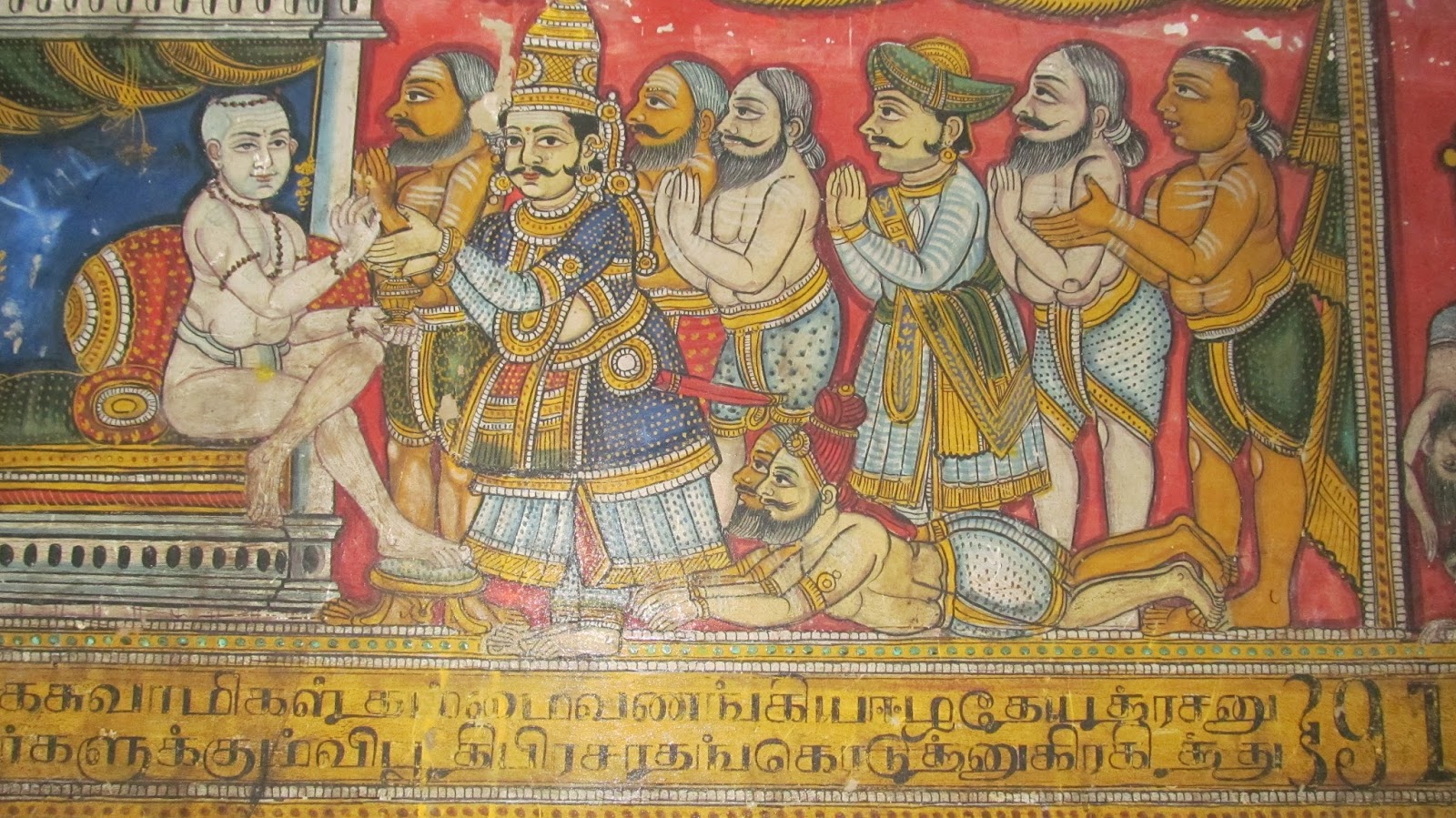
The Manivasagar sannathy in the temple is a treasure trove of ancient paintings with natural colours depicting the biography of Manbivasagar however, in the verge of extinction....  


figurative depiction of 27 constellations of stars

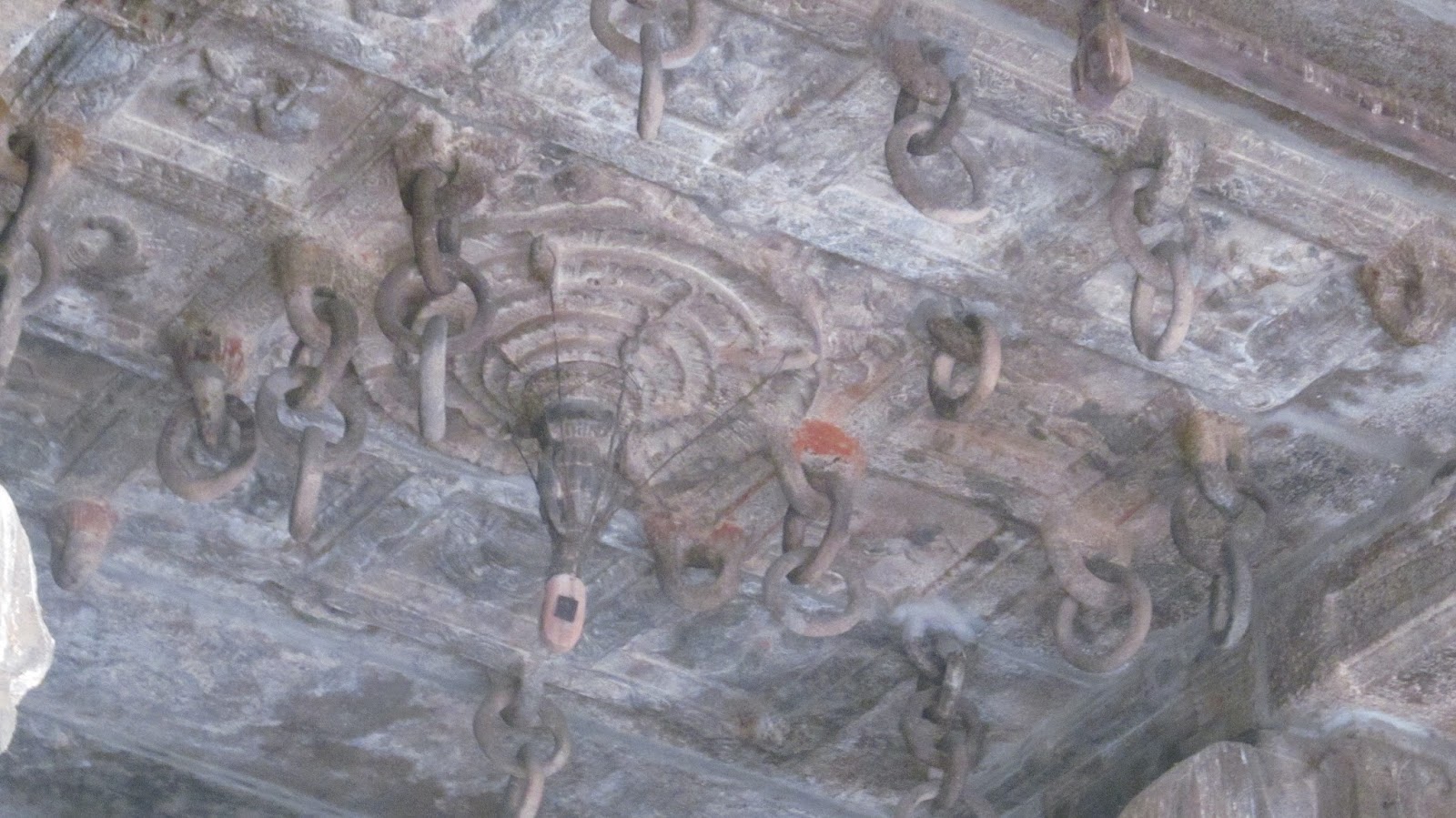
Stone chains dangling from the ceiling - the audacious expression of stone carving skills;


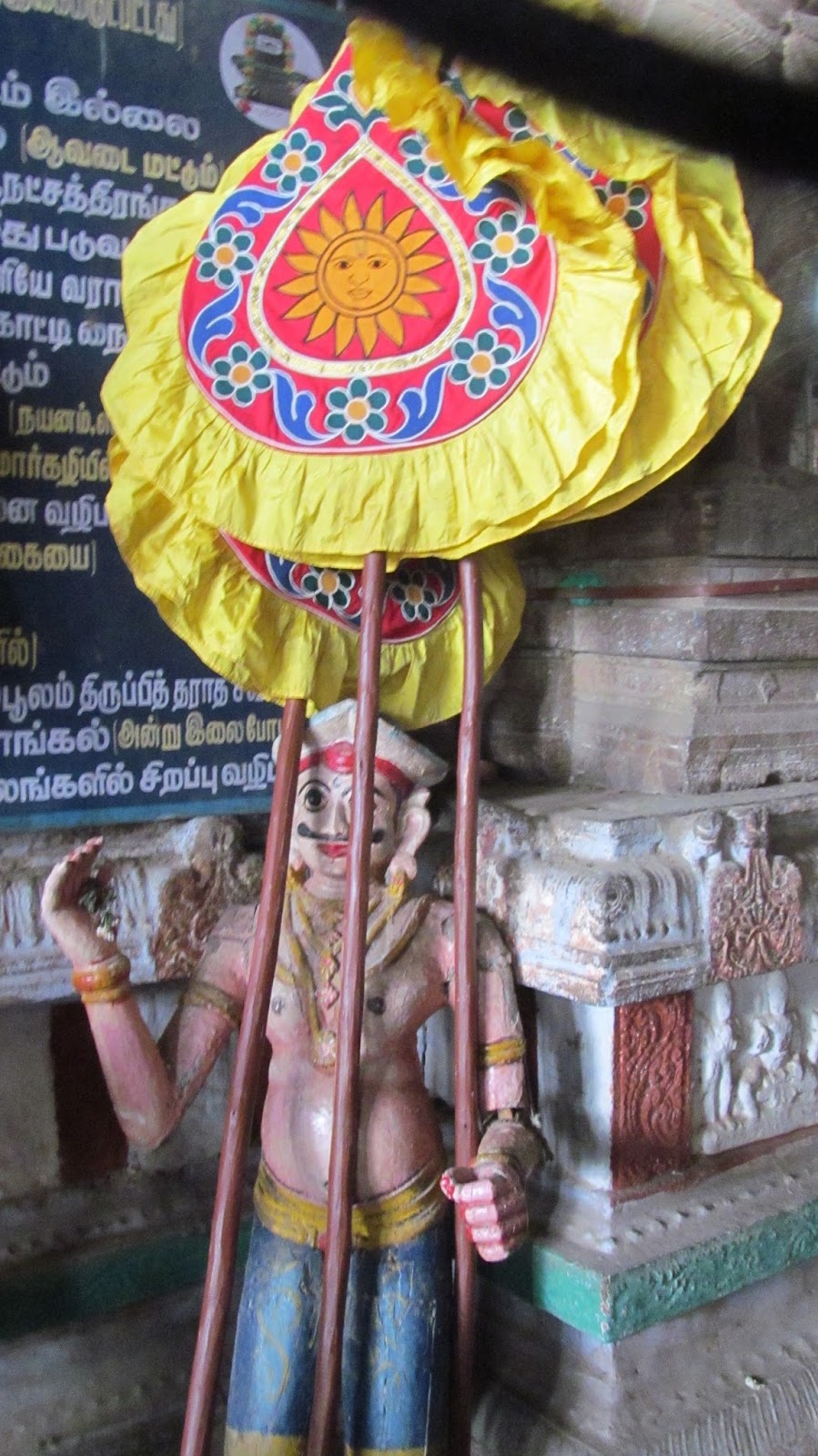
an ancient cavalry man with his weapons and elaborate ornaments;


The following patterns found in the huge pillars have said to have gone into textile designs;


 The temple has a number of mandaps with exquisite and intense art expressions;


Sheppard.......


Thiruvasagam Pitchiah Pillai of Tirunelveli, an authority on Thiruvasagam, explains the features of the temple;


2 May 2015

Raging bulls and the daring men! - grounds of Paalamedu – the touchstone of Tamil heritage, valour and pride...!


On the next day to the previous Pongal, I visited the bull taming sport event at Paalamedu village on the outskirts of Madurai with my friend Kannan. Paalamedu is one of the typical remote villages of the country, lying at the foothills of the Sirumalai Range amidst picturesque surroundings. 

It is one of the 3 villages on the outskirts of Madurai popular for bull taming sports practiced / celebrated with much fan fare since perhaps the days of yore. 

On approaching the Palamedu village, a charged atmosphere of enthusiasm and spirit of the event was becoming tangible and gradually started permeating into everyone around. The fervor was so discernible!   


‘Jallikkattu’ – is this a Telugu combo phrase?- ‘thisai chol’? – or the more literary Tamil expression ‘eru- thaluval’, or the colloquial one, ‘ Manju virattu’  is an ancient  bull taming game of valour – a sizzling benchmark sport of Tamil bravery popular and practiced with pomp and zeal particularly in the spartan agrarian villages surrounding Madurai - the ancient Pandya capital town during Pongal – the traditional and prime Tamil festivity of post harvest occasion.  

The enthusiasm in this village was so much pulsating that it clearly caught us up and we just descended automatically and unconsciously felt absorbed into the surrounding phenomena.

Raging bulls and daring youth of Madurai region – the testimony of the raw bravery and absolute confidence on virtual display;


We could see that the people of this locality take immense pride and are emotionally involved in this game with absolute zest. Next day, news papers estimated the crowd to be of 50 thousand plus.


 Another adjacent village Alanganallur is also World famous for this bull taming game of gallantry, celebrated on the next day to Paalamedu jallikkattu from time immemorial. Avaniyapuram is the other village among the 3 villages.

Alangaanallur jallikkattu grounds are in fact a street in the midst of that village;


Taming a bull or taking away the gifts tied between the horns or cloth tied to the bull’s neck was once considered as the winning point in the game. A recent press report tells about an ancient rock relief sculpture, found recently, depicting a bull tamer holding the horns from front.    
The rules of the game recently have been highly standardized due to interventions by a variety of agencies and vested groups who are bent on streamlining (?) this event to the extent of thwarting its sheen.

As per the present rules of the game, a bull’s ferocity is to be contained after it is released into the arena by any of the participants. 

If any participant is able to hold on the horns and / or hump for a particular duration, the bull is considered as tamed.

If the bull escapes the hold, it is declared as an untamed one, to the pride of its owner. The owners of untamed bulls are also rewarded.    

Bulls are released into the grounds one by one through ‘vaadi-vaasal’ – a narrow entrance.

If the bull is tamed by more than one person it is a fowl!

The bull should not be touched by its tail, or neck.

And the watchful jury of the village committee perched on the top of the vaadi- vaasal announces the proceedings and declares their verdicts instantly!  

The youth from the nearby villages participate with great confidence and with immense spirit in this game.

Bulls are reared especially for this purpose. A sort of social standing and pride is drawn from owning an indomitable bull! 

The bull tamer is rewarded with gifts ranging from dress, utensils, to cycle, steel bureaus and even gold coins.

There went many a bulls displaying raw strength and ferocity easily wriggling out of the approaching tamers to the pride of their owners. The owners are acclaimed their villages are mentioned and rewards distributed immediately to them by the jury of the village committee. Some 600 tamers participated. Injury or even death at times is common - which it seems never dampened the enthusiasm. 42 participants injured on that day.


Paalamedu Jalikkattu is traditionally organized and conducted by Sri Mahalingaswamy Temple Administrative Committee of the village. So the first bull which is allowed to enter into the arena is the Paalamedu temple bull which is revered and is allowed to go without taming.


Gifts of steel bureaus to the valiant tamers stored in the temple premises;


Every historical villages of Madurai country side rear a temple bull and such bull is reverentially treated. ‘Koil-kaalai’ is a common Tamil word with many colloquial connotations. The villages mourn the death of their village temple bulls and observe their funeral as if a member of the village community. There are memorials for them in several villages. Koil kaalais are first released through vaadi vaasal in many jallikkattus. They are revered and allowed to go and no one is permitted to tame them. Koil kaalai is a chosen one. It is 'eugenic' system of sustaining the best of the indigenous breeds. 
   
That is the depth of this single celebration wafted into the socio, economic and cultural streaks of Tamil country. 

Vaadi vassal i.e. the gate through which the bulls are sent into the bull taming ground one by one with proper introduction of the owner and his village.


The huge line of waiting bulls for their time behind the vaadi vaasal entrance to the grounds;


About 541 bulls reported to have participated;


Bravery is writ on the walls of Paalamedu…..Graffiti of the celebrated hero of Kongu Country - the invincible Tamil warrior, Chinnamalai, who fought against the British colonial army during the Tamil Country’s Revolt against the British in 1802.

Paalamedu is a tiny village near Madurai nestled on the foothills of Sirumalai range at the bosom of  mother nature.


The popular film ‘Murattukkaalai’, of ‘circa’ 1980 has aptly glorified the spirit of this game of gallantry and etched it's cultural background in the Tamil memory for ever. 


The recent film, ‘Virumandi’ has also vividly captured the electric atmosphere of jallikkattu and its deep rooted sylvan consciousness in the contemporary social milieu of Madurai.


An old fashioned house at Paalamedu; 


The Spanish Bull fighting - more aptly a horrible killing event (?) – I believe is an inferior one and not at all comparable with the gallant jallikkattu of the Tamil country as it involves just tactically spearing the bull to its unethical and eventual killing. 


Whereas jallikkattu involves testing the mettle of hearts, caliber of minds, assessment of timing, agility and strength of brawn all put together apart from the reverential treatment to the bull. More importantly the jallikkattu is warped and interwoven into the agro - social heritage, culture and civilizational consciousness of Tamil country. 

Jallikkattu, Rekla race and other such sports events are common to the post harvest mirth and celebrations throughout the Eastern rice belt of India. such celebrations are deep routed in the social consciousness and thanks giving peasantry believes to the nature that they form part of the heritage capital as the farming communities believe that such celebrations are important for the subsequent successful cropping.   

Pray legal vistas be reopened for the sustenance and continuity of this unique gallant sport of our ancestry, a symbol of Tamil cultural heritage.

It was reported that on the next day’s jallikkattu at Alanganallur, a man of match was selected – based on the number of bulls an individual had tamed. A young cop from the locality emerged as the man of the match and was rewarded with a two wheeler!

The Indian Army can conduct a recruitment camps on these events. I am sure, several of these brave young bull tamers could make out valiant commandos of our Army.   

Bull motifs are one of the iconic symbols found in ancient civilizations and in history – such as Egyptian and Indus civilizations.


It is interesting and pertinent to note the Semitic denigration of the ‘Apic’ bull symbol of the Egypt and other similar ancient cultures and promotion of goat iconography instead. Examples are the 'golden calf' of the book of Exodus and the biblical, 'adoration of the holy goat'.   

The revered Apis bull of the Egypt;


Awal [bull], the traditional symbol of Bahrain;


That perhaps explains the compulsion of a neo - religion growing over an ancient heritage against the connected insignia of the region.

Cattle stock varieties were once carefully nurtured in the Tamil country which was epitomized as wealth as they ensured mobility, transportation, agricultural force apart from dairy to the common households. The Tamil word, ‘Maadu’ [a common word for bull and cow] simply and directly connotes wealth. Old time, Tamil word, ‘Maattuppen’ denotes the daughter –in-law who is welcomed as a lakshmi i.e. harbinger of luck to the family. The grand guru of Tamil lands, Tiruvalluvar uses the word ‘maadu’ to denote wealth.

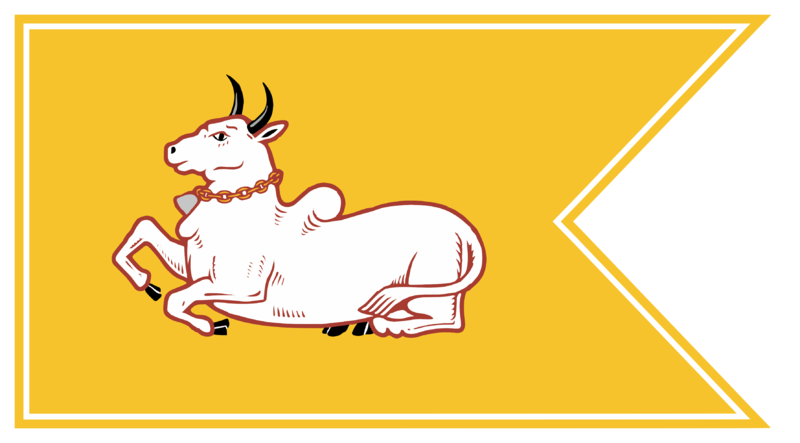
Bull was the ancient symbol of Pandya country before its replacement by fish emblem. Tamil word, 'Pandu' meaning the 'ancient' is the root word of 'Paandi'. However, the word, 'Paandi' also denotes the bull. The Pallava country also was symbolized by bull before the insignia was changed to the lion logo during the reign of Emperor Narasimma varma. 


Bull symbolizes toughness and raw strength. However it also represents ‘Saadhvik’ i.e. matured composure among the three gunaas [nature] of ‘Sath, Rajo and Thamas’. The bull symbol denotes amicability while at the same time ferocity if disturbed. Thus bull symbolizes the potent power of ancient civilizational heritage systems which are constructive, self -sustaining and cohesive. 


 The personality traits comparison of the zodiacal ‘Taurus’ would be an interesting match! Taurus represents the element of Earth 'Prithvi' or lands and thus indicates ownership over lands and stability.

Perhaps bulls preceded lions to denote the nobility. 

Bull represents the ancient civilizational traits whereas the lion the later institutionalized imperialism. 

A self sacrificing Leadership over a domineering one...!

From real character to outwardly charm...! 

From the beauty of civilization to brute cunning colonialism...!


It is interesting to note that the lions stand over the pedestal with an image of bull on the Saranath pillar.  


Bull is the prime force behind the ancient organic mode of agriculture in the Tamil country.  Bull is also a principal symbol of Tamil Saivite tradition. 


Bull or Nandhi denotes an evolved soul which becomes the seat of Lord Shiva. The Word ‘shivam’ is interpreted as ‘mangalam’ i.e. all the positivity - Good - noble. Interestingly all the above coherent ideas are built in the symbol of Bull. 

                              
Traditional agrarian Tamil communities revere and celebrate bulls by dedicating a special day of Maattu Pongal. Though almost all the traditional Tamil communities are non vegetarian and partake red meat, beef still remains a taboo in the Tamil psyche. That is one reason, why the neighboring Kerala state offers an attractive market for the distress sale of cattle by Tamil farmers. 


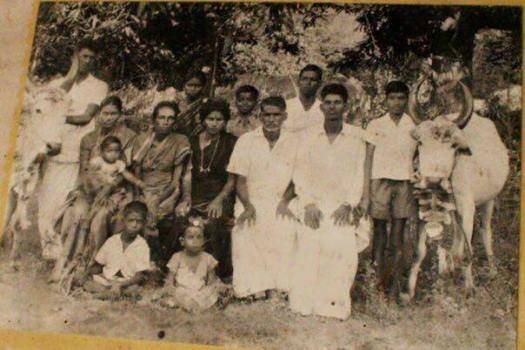
A Tamil family photo of  past era.....! 


The symbol of bull now has been reduced just to denote the way it charges – an upward stock price movement! 


It is a pity that the rich genetic wealth of our cattle stock bequeathed to us by our ancestors is at threat due to myriad reasons – perhaps the prevailing ban on the  jallikkattu is one among them. The offer of shelter by a Coimbatore institution to Madurai - Dindigul based abandoned bulls and the way the people welcomed them en-route has recently been reported in the press and was indeed heartening. 


Above all, the bull symbolizes ‘selflessness’ which is the root trait of every ancient civilization. For example the Paandya territory has thousands of meticulously planned and ingeniously built ancient irrigation systems/ water bodies now almost in the verge of ruin. Our ancestors built systems for the forthcoming generations to sustain. What we have made out of them is obvious..... Ah!... perhaps we live in the 'present' and follow the wisdom of the great American economist JM Keynes, who's one famous canon is that ‘in the long run we are all dead’!

India is the only country in the entire globe with such a rich diverse varieties of indigenous cattle breed; the rearing of which is interwoven into the social, cultural, economic and religious fabrics of our life. It seems exactly this is what targeted by the alien forces backed by MNC-economic and missionary interests.   


May Lord Shiva restore the wisdom of this land which is the real wealth of this Country.